
- Business Hours Mon-Sat · 9:30am-7:30pm
- Email Us sanjay@sk-agency.com
- Call Us 022 4341 1999
- Get a Quote
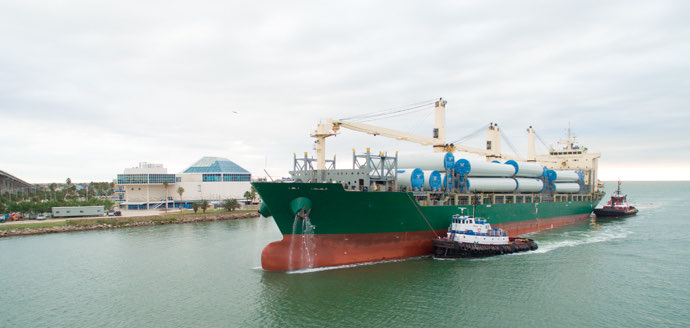
Some cargo does not fit the liner model. A parcel too large for scheduled space, a machine that cannot be containerised, a project that needs the steel on site in a fixed window rather than whenever the next sailing has room. Ship chartering is hiring the vessel, or a defined part of it, directly from the owner, and it is often both cheaper and faster than forcing awkward cargo through a container service.
S. K. Agency has been chartering and broking since 1990, alongside our work as a licensed customs broker. That combination is unusual and it matters: on a chartered parcel, demurrage runs against the vessel while a clearance problem is sorted out, so having the fixture and the customs clearance handled by one team removes the most expensive kind of delay.
Dry bulk, steel and steel products, project consignments and plant modules, over dimensional cargo, break bulk and RORO units, and equipment for the oil, gas, power and renewable sectors. For conventional containerised freight, our freight forwarding service is usually the better route.
Ship chartering is hiring a vessel, or space on one, directly from the owner under a contract called a charter party, rather than buying space on a scheduled liner service. The charterer gains control over the cargo, the loading window and often the route. It is used when a parcel is too large, too heavy or too awkward for liner service, or when the timing of a project makes waiting for scheduled sailings impractical.
Under a voyage charter the vessel is hired for one defined voyage between named ports and freight is paid per tonne of cargo carried, with the owner bearing the running costs. Under a time charter the vessel is hired for a period, the charterer directs where it trades within agreed limits, and hire is paid per day. Voyage charters suit a single shipment; time charters suit a programme of movements over months.
A ship broker matches cargo to available tonnage. In practice that means canvassing the market for suitable vessels, negotiating freight rate, laycan and laytime terms with the owner or their broker, drafting or reviewing the charter party and its rider clauses, and then following the fixture through loading, the voyage and discharge, including the laytime calculation at the end.
Laytime is the time allowed under the charter party for loading and discharging the cargo. If the charterer exceeds it, demurrage is payable to the owner as compensation for the vessel being detained. If loading or discharge finishes early, despatch may be payable by the owner to the charterer, usually at half the demurrage rate. These are calculated from the statement of facts at each port and are frequently disputed, which is why the wording of the laytime clause matters.
Chartering usually wins when the parcel is large enough to fill a meaningful part of a vessel, when the cargo is bulk, break bulk or over dimensional and cannot be containerised, when liner space is scarce or the schedule does not suit a project deadline, or when the cargo needs a direct sailing without transhipment. For small containerised consignments a liner service is almost always cheaper.
Yes. S. K. Agency is a licensed Custom House Agent with AEO-LO status, so the Bill of Entry filing, duty assessment, examination and delivery of the chartered cargo are handled by the same firm that arranged the vessel. On a chartered parcel this matters, because demurrage runs against the vessel while any clearance issue is resolved.
Tell us the cargo, the tonnage, the load and discharge ports and your laycan window, and we will come back on what tonnage is available and at what rate. Call +91-22-4341 1999, email sanjay@sk-agency.com, or send us the details.